Implantology
Flapless, suture-free implants: how does the technique work?
What is the flapless implant technique, how does it differ from the conventional method and who might it suit? A clear explanation of dental implants.
· 6 min read
Losing teeth affects both chewing and self-confidence. One of the most widely discussed ways to restore missing teeth in modern dentistry is the dental implant. In this article we explain how an implant is built and what the flapless, suture-free technique means.
What is a dental implant?
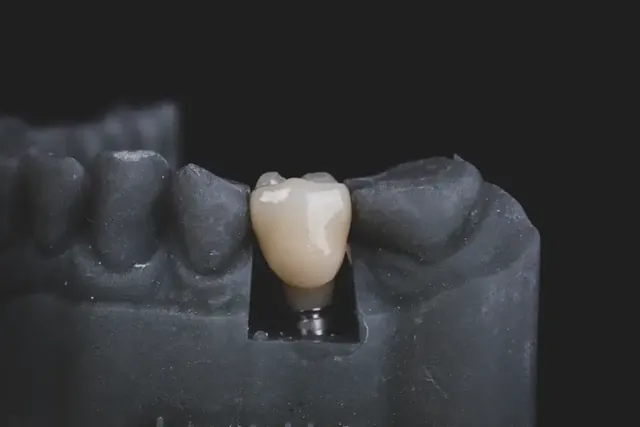
A dental implant is a small screw-shaped device placed in the jawbone to replace the root of a missing tooth. A fully restored implant consists of three parts:
- Implant — the part placed in the bone (replaces the root);
- Abutment — the connector between the implant and the crown;
- Crown — the visible part that replaces the tooth.
How does the conventional technique differ from the flapless one?
In the conventional technique, the gum is cut before the implant is placed, the bone is exposed, and stitches are placed in the gum at the end of the procedure.
In the flapless technique, in suitable clinical cases the implant is placed without a wide gum incision. As a result, no stitches are needed.
Is this technique suitable for everyone?
No. Whether the flapless technique can be used depends on several factors:
- the volume and quality of the bone;
- the condition of the gum;
- the area where the implant will be placed;
- the patient’s general health.
For this reason, the decision is made only based on an examination and X-rays (including 3D CT scans). In some cases the conventional technique or additional procedures may be more appropriate.
What are the stages of the procedure?
- Consultation. Your concerns are discussed and your mouth is examined.
- Diagnostics. The bone is assessed with X-rays and a CT scan.
- Planning. The position, size and angle of the implant are planned.
- Implant placement. Using the flapless technique where suitable.
- Healing period. The implant needs time to integrate with the bone; the duration varies from person to person.
- Crown fitting. The abutment and crown are placed.
What if several teeth are missing?
When several or all teeth are missing, fixed constructions can be made on implants. In one clinical case from our practice, fully fixed teeth were made on 12 implants, restoring both aesthetics and function. A plan for this kind of treatment is prepared individually for each patient.
Aftercare
- Follow your dentist’s instructions;
- keep the gum around the implant clean: soft toothbrush, interdental brushes, low-abrasive toothpaste;
- smoking can have a negative effect on healing — discuss this with your dentist;
- attend regular follow-up check-ups.
Frequently asked questions
Can an implant get tooth decay?
No, decay does not develop in the implant itself. However, the tissues around the implant need to be kept healthy, so hygiene is very important.
How long does the procedure take?
It depends on the number of implants and the clinical situation. Your dentist will explain everything in detail during planning.
Is the flapless technique right for me?
This can only be said after an examination and X-rays.
This article is for information only and does not replace an examination by a dentist.
Book a consultation: WhatsApp — +994 50 224 52 25